E-mail us: [email protected]
24 Hour Service - 7 Days in Hebdomada

Auxiliare nunc opus est? nos voca!
+86-573-8553-5198
E-mail us: [email protected]
24 Hour Service - 7 Days in Hebdomada
Auxiliare nunc opus est? nos voca!
+86-573-8553-5198
Manipulus noster superbe praebet pignus temporis et pro 100% satisfactionis emptoris spondet.
Contactus Online


Order a "4-inch flange" without specifying a standard, and you may receive a part that fits nothing on your job site. The bolt circle on a 4-inch ANSI Class 150 flange does not align with a DN100 PN16, and neither matches a JIS 10K of the same nominal size. These three standards govern most of the world's industrial piping—and they were never designed to be interchangeable.
For engineers and procurement teams working across borders, understanding what separates ANSI, DIN, and JIS flanges is not just academic. It directly affects project timelines, seal integrity, and safety compliance. This guide breaks down the differences and gives you a clear framework for making the right call.
Every flange standard defines its own bolt circle diameter, bolt hole count, flange thickness, facing geometry, and pressure-temperature rating language. Change one of these variables and the mating surfaces no longer align—gaskets cannot seal properly, bolts cannot be torqued evenly, and the joint becomes a leak or failure point under pressure.
The three major global systems—ANSI/ASME, DIN/EN, and JIS—each evolved independently to serve their home industries. They use different measurement units, different rating nomenclatures, and different material grade references. A flange that meets one standard will almost never physically mate with a flange built to another, even at the same nominal pipe size.
This is why the first question in any flange specification is not "what size?" but "which standard?"
In the United States and across much of the Americas, flanges are governed by ASME B16.5, which covers pipe flanges and flanged fittings from NPS 1/2 through NPS 24. Larger diameters fall under ASME B16.47. Though the standard was historically labeled ANSI B16.5, it has been formally designated ASME B16.5 since 1996—the two terms refer to the same specification.
ASME flanges use a Class-based pressure rating system: Class 150, 300, 400, 600, 900, 1500, and 2500. The Class number does not directly represent a pressure value; it represents a pressure-temperature rating that varies depending on the material group and operating temperature. A Class 150 carbon steel flange at 100°F carries roughly 285 psi, while the same flange at 500°F drops to around 170 psi.
Dimensions are expressed in imperial inches (NPS—Nominal Pipe Size). Common materials include ASTM A105 for carbon steel and ASTM A182 F304L/F316L for stainless steel grades.
Where ANSI/ASME flanges dominate: North America, the Middle East oil and gas sector, and global projects where American EPC contractors set the specifications. They are the default standard for offshore platforms, LNG terminals, and high-pressure steam systems.
Explore ANSI forged flanges manufactured to ASME B16.5 specifications from Baihui's standard forged flange range.
Europe operates on the DIN/EN system, originally codified by Germany's Deutsches Institut für Normung (DIN) and now largely harmonized under European standard EN 1092-1. The two sets of specifications are closely related; EN 1092-1 has progressively replaced older DIN designations like DIN 2501 and DIN 2633 across the European Union, though DIN part numbers remain widely recognized in international trade.
DIN/EN flanges use a PN (Pressure Nominale) rating system: PN6, PN10, PN16, PN25, PN40, PN63, PN100, and higher. Unlike ASME Classes, the PN number does approximate the working pressure in bar at ambient temperature for a given material group—a PN16 carbon steel flange is rated at 16 bar (approximately 232 psi) at 20°C. Pressure capacity decreases with rising temperature.
All dimensions use the metric system, with pipe sizes designated as DN (Diameter Nominal) in millimeters. A DN100 PN16 flange is roughly equivalent to a 4-inch ANSI Class 150 in application, but the bolt holes, flange OD, and thickness are dimensionally different.
Where DIN/EN flanges dominate: Continental Europe, North Africa, and projects involving German, Italian, or broader EU engineering contractors. Chemical plants, water treatment facilities, and food processing equipment across Europe almost universally specify DIN or EN flanges.
Baihui produces standard forged flanges across ANSI, DIN, JIS, and other global specifications from 316/304L stainless steel.
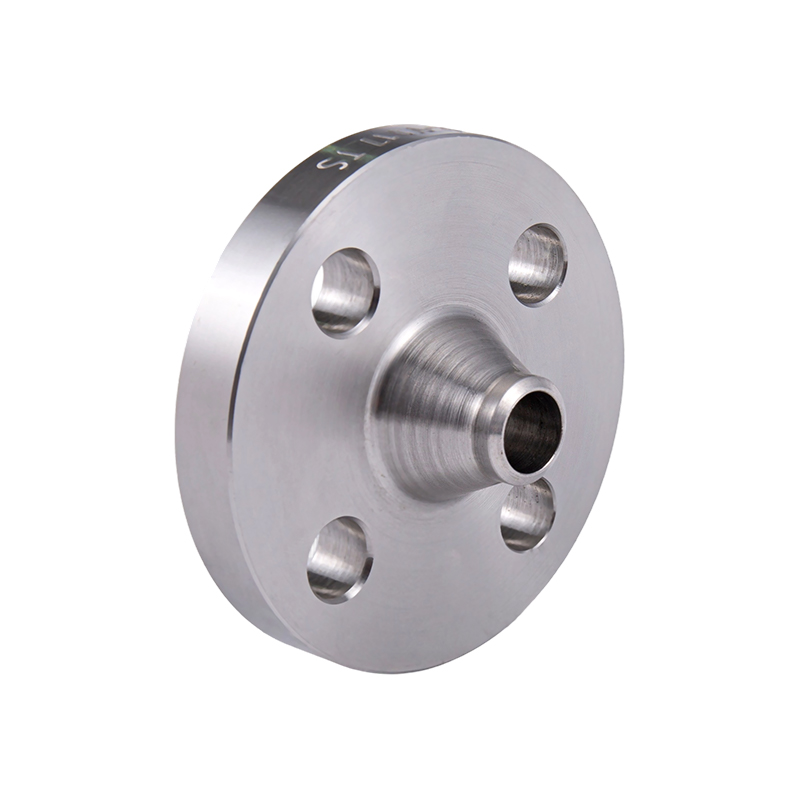
Japan's industrial flange standard, JIS B2220, governs steel pipe flanges across Japan and has been widely adopted in South Korea, Taiwan, and Southeast Asian markets with strong Japanese industrial influence. A separate specification, JIS B2291, covers hydraulic fluid power flange connections.
JIS flanges use a K-series pressure rating system: 5K, 10K, 16K, 20K, 30K, and 40K. The K value represents the working pressure in kilogram-force per square centimeter (kgf/cm²) at ambient conditions—a 10K flange is rated at approximately 145 psi (10 kgf/cm²). Like other systems, actual allowable pressure decreases at elevated temperatures.
Pipe sizes follow the Japanese nominal size "A" series (metric-based), and overall flange dimensions are generally more compact and lighter than their ANSI counterparts at equivalent pressure ratings—a characteristic valued in shipbuilding and marine applications where weight matters.
Where JIS flanges dominate: Japan, South Korea, Taiwan, and facilities built with Japanese process equipment across Southeast Asia. Shipyards, waterworks, and general industrial plants following Japanese engineering practices consistently specify JIS. In mixed-standard projects across Asia, JIS and ANSI flanges often coexist, requiring careful system boundary management.
| Parameter | ANSI / ASME | DIN / EN | JIS |
|---|---|---|---|
| Governing Body | ASME (USA) | DIN / CEN (Europe) | JSA (Japan) |
| Key Specification | ASME B16.5 / B16.47 | EN 1092-1 / DIN 2501 | JIS B2220 |
| Pressure Rating System | Class (150–2500) | PN (6–100+) | K (5K–40K) |
| Rating Unit | psi (pressure-temp dependent) | bar at 20°C | kgf/cm² at ambient |
| Size Designation | NPS (inches) | DN (millimeters) | A-series (metric) |
| Dimension System | Imperial | Metric | Metric (compact) |
| Primary Regions | Americas, Middle East | Europe, North Africa | Japan, Korea, SE Asia |
| Typical SS Grades | ASTM A182 F304L/F316L | EN 1.4301 / 1.4404 | SUS304 / SUS316L |
| Common Applications | Oil & gas, power, petrochemical | Chemical, water, food processing | Shipbuilding, waterworks, general industry |
One comparison that often confuses procurement teams: ANSI Class 150 and DIN PN16 are frequently described as "roughly equivalent" because both cover low-to-medium pressure service. They are not dimensionally equivalent. The bolt circle, number of bolt holes, and flange face dimensions differ—connecting them directly will not work without an adapter spool.
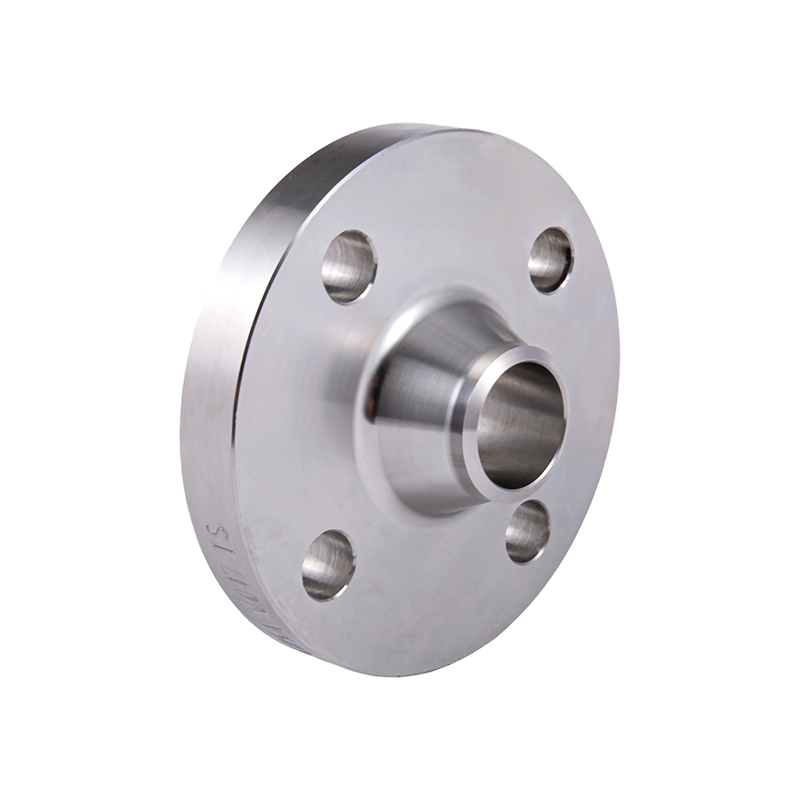
When the application involves corrosive media, high-purity fluids, or hygienic environments, stainless steel becomes the material of choice—and all three standards support it, though with different alloy designation systems.
Under ASME, stainless flanges are specified by ASTM A182 grades: F304, F304L, F316, and F316L are the most common. The "L" grades (low carbon) are preferred for welded assemblies because they resist sensitization and intergranular corrosion after heat exposure. 316L is the benchmark for chloride-bearing environments—coastal plants, chemical dosing systems, and offshore installations.
DIN/EN uses European material numbers: 1.4301 (equivalent to 304) and 1.4404 (equivalent to 316L). JIS uses SUS304 and SUS316L under its own numbering system. Despite different designations, the underlying alloy compositions are closely aligned across the three systems, which simplifies cross-standard material substitution when the dimensions are otherwise managed.
For industries like food processing, pharmaceuticals, and nuclear power—where both corrosion resistance and dimensional precision matter—specifying the correct standard and the correct alloy grade in the same document is essential. A 316L flange built to the wrong standard will still leak if the bolt pattern does not match.
Most projects have the standard already decided before a single flange is ordered. If you have engineering drawings, the standard is on them. But for new projects, greenfield installations, or situations where you are inheriting a system with mixed documentation, a five-step check resolves most cases:
For procurement teams sourcing internationally, pairing this checklist with a supplier that can manufacture across all three standards eliminates a major coordination burden. See Baihui's quality certifications and manufacturing standards compliance for documentation on the standards and inspections we support.
Browse our complete range of flanged pipe fittings for complete piping system assemblies when your project requires matched components beyond the flange itself.
Some projects sit at the boundary between two standards. A Southeast Asian LNG terminal built with Japanese process equipment connecting to an American-standard export pipeline. A European chemical plant retrofitting an ASME-standard reactor into a DIN-standard utility loop. In these cases, a standard flange from any single system cannot bridge the gap.
The solution is a transition spool or adapter flange—a custom component with one face drilled and faced to one standard, and the other to a second. This is not a workaround; it is an engineered connection that requires explicit pressure rating calculations and documentation for both standards at the interface.
Off-the-shelf transition pieces exist for the most common size-and-class combinations, but unusual pairings, high-pressure ratings, or corrosion-resistant materials often require custom fabrication. The key requirements are: matching bolt circle and hole count on each face, compatible facing finish (raised face, flat face, or ring-type joint), and a confirmed pressure rating that satisfies the lower-rated standard at the interface.
Baihui's custom non-standard flanges for cross-standard and application-specific connections are manufactured to customer drawings, covering special dimensions, non-catalog pressure ratings, and dual-standard transition components in 316L and 304L stainless steel.
If your project requires a flange that does not fit a catalog page, the right move is to share your drawing and operating conditions with a manufacturer who understands all three standards—not just the one printed on the purchase order.

LAT
Products
Contact info.
+86-573-8553-5198
+86-136-1655-8299
+86-573-8553 5198
No. CCVII, Chuangye Road, Zhapu oppidum, Pinghu urbem, Zhejiang provinciae, China
QR code
 Composuerunt Diver Flanges Suppliers